It’s all too easy for learning content to fail. Sure, it might be completed on time and it may satisfy the formal criteria of a training programme. Yet weeks later, little of it remains active in the learner’s thinking or behaviour. Soberingly, people forget 90% of the information they receive within a week, according to e-learning evangelist Justin Seely. Only 12% of employees apply skills they learned on L&D programmes to their jobs according to Training Industry.
The reason for this failure isn’t primarily because of digital fatigue or low attention spans. The reason comes down to design assumptions, especially when learning content is built around the transmission of information instead of a cultivation of genuine insights. What this really looks like is learners being treated as recipients of fixed, infallible expertise instead of participants in a shared inquiry that leaves room for imperfection.
If learning is to become legitimately learner-centric, it needs a different starting point. One that takes seriously how people actually think, doubt, resist and make sense of their experience. Surprisingly, one of the most useful guides here isn’t a contemporary learning theorist, but a 16-century French philosopher called Michel de Montaigne.
Montaigne and the origins of reflective thinking
Montaigne is best known as the creator of the essay genre, which comes from the French word assay, meaning to try. He created the essay to explore his thoughts, habits, contradictions and reactions to the world, and to do so in a way that invited the reader into that process rather than positioning them as a passive audience.
Montaigne wrote without the institutional authority of the church and monarchy, and without the expectation that he would resolve any question he raised. To him, uncertainty was a productive state. His writing made room for doubt and self-correction, trusting that meaning would emerge through sustained reflection over forced conclusions.
For modern learning designers, this approach is strikingly relevant. Montaigne didn’t design content to be consumed efficiently. The very idea would have amused the man who famously said “nothing is so firmly believed as what is least known.” Montaigne designed conditions under which readers might recognise themselves, test their own thinking and arrive at clearer judgment. In modern terms, he was learner-centric long before the phrase existed.
Why Montaigne’s approach resonates with modern L&D
Montaigne’s work feels modern because it mirrors several dynamics that now define effective learning and content creation.
Firstly, his invention of the essay represented genre as innovation. By creating a new format optimised for attention and intimacy, he bypassed the traditional gatekeepers of state and church and built a direct relationship with his audience. In L&D, this invites a reconsideration of inherited formats. Slide decks, linear modules and rigid learning paths aren’t neutral containers; they shape how learners engage. Learner-centric design often begins by questioning whether the format itself allows space for thinking and reflection.
Secondly, Montaigne treated the self as a medium. His lived experience wasn’t a distraction from philosophical inquiry but its main resource. This has clear parallels in learning contexts, where abstract frameworks often fail because they are stripped of the situations and emotional realities in which learning must actually operate. Learners struggle with those concepts because they’re disconnected from lived experience, not because they are complex.
Finally, Montaigne’s conversational tone created an early form of intellectual intimacy. Readers felt accompanied rather than instructed. This sense of thinking with someone instead of being talked at is an important but often overlooked element of learner-centric content, especially in professional and workplace learning.
The Montaigne Method Of Learning Design
Based on Montaigne’s ideas, I’ve developed a framework called The Montaigne Method Of Learning Design. This framework is to help create learner-centred content, but it doesn’t replace instructional design fundamentals. The aim is to reframe the early stages of content creation so that learning begins with observation, reflection and inquiry over immediate solution-building.
Think of it like this:
Traditional L&D vs the Montaigne Method
Outcomes first become observations first.
Linear pathways become iterative exploration.
Expert certainty becomes healthy uncertainty.
Best practice becomes lived tension and realities.
At its core, the Montaigne Method asks a simple but radical question: What are learners already noticing, feeling or struggling with that hasn’t yet been fully articulated?
Below is how the framework can be applied in an L&D or training provider context step by step.
Step 1: The Spark Box - capturing learner reality
The first step is to collect raw material without judgment, what I like to call sparks for the flashes of insight they reveal in a moment. What this looks like is not starting with learning objectives or competency frameworks. Instead, focus on gathering observations from the lived reality of learners. These might include frustrations voiced in workshops, informal comments made after sessions, moments of resistance to policies or recurring points of confusion.
At this stage, nothing is refined or reframed and up to ten sparks should be written down.
Practical example:
You’re designing a leadership programme for a company and you notice that a lot of participants privately express discomfort with giving feedback, even though they intellectually understand its importance. Comments such as “I know I should address this, but it always feels risky” or “I worry I’ll damage a relationship” are captured verbatim in the Spark Box, without immediately translating them into learning objectives.
Step 2: Angle Finder - Introducing cognitive friction
From the Spark Box, a small number of observations are selected and explored more deeply. The purpose here is to uncover tension and resist the urge to immediately diagnose a solution. You’re looking for the question behind the question.
Practical example:
Using the feedback discomfort spark, you explore how this contradicts the company’s stated values of trust and openness. You identify an underlying belief that honesty and safety are in tension as opposed to mutually reinforcing. The hidden question becomes “why does feedback feel like a threat even in cultures that claim they value transparency?”
Step 3: Association Web - Building depth through connection
Once a core tension has been identified, the next step is to layer meaning through association. In other words, you want to add more perspectives than jumping right into creating content. These perspectives might include historical parallels, stories from experienced leaders, cultural narratives about authority, or competing viewpoints within a company.
The aim is to help learners see issues from multiple angles, supporting the development of judgment and not rote compliance.
Practical example:
You create an association web for a training module about feedback. It incorporates a story from a senior leader about avoiding difficult conversation early in their career, alongside a brief historical reflection on how hierarchical workplaces have traditionally discouraged public challenges.
Step 4: Stress Test - Thinking out loud
Before formalising the content, the idea is tested in live or semi-live conditions. You’ll explain the core tension and associations out loud to colleagues, pilot groups or create recorded reflections for yourself.
Throughout this process, you’ll pay close attention to where people lean forward to listen or seem confused by the idea. Or where you find confusion with articulating the idea back to yourself.
Practical example:
You run a short pilot discussion with a small group of managers, framing the session around the emotional risk of feedback. You notice heightened engagement and open discussion, but also confusion around how vulnerability fits with accountability. These reactions inform the next iteration of the content.
Step 5: Distillation - Turning reflection into learning assets
Only at this stage is all the information you’ve gathered turned into formal learning assets. These might be exercises, discussion prompts, micro-lessons, facilitator stories or written articles.
Crucially, distillation remains provisional and repeatable. You’ll want to test your ideas again and again and review them through all five steps of the Montaigne Method.
Practical example:
The final output includes a reflective exercise where learners write about a feedback conversation they avoided and what they were protecting by doing so. This is followed by a facilitated discussion that doesn’t become about creating a check list for ‘best practice’ behaviours.
Try The Montaigne Method for yourself
Now that you’ve seen what the Montaigne Method of Learning Design is, I encourage you to try it for yourself. I also urge you to keep in mind that this framework shouldn’t be taken as a restrictive set of rules you have to follow. Montaigne himself was never one for following a rigid set of principles.
What the Montaigne Method should be taken as is a way to create better conditions for thinking. Montaigne’s legacy reminds us that depth, reflection and intellectual honesty are the truest essence of being human.
For learner-centric content doesn’t begin with answers. It begins with paying attention to a learner’s interior world, their contradictions, their unfinished thinking and their capacity to be curious. As Montaigne said of learning, “it’s good to rub and polish our brain against that of others” and “learned we may be with another man’s learning; we can only be wise with wisdom of our own.”
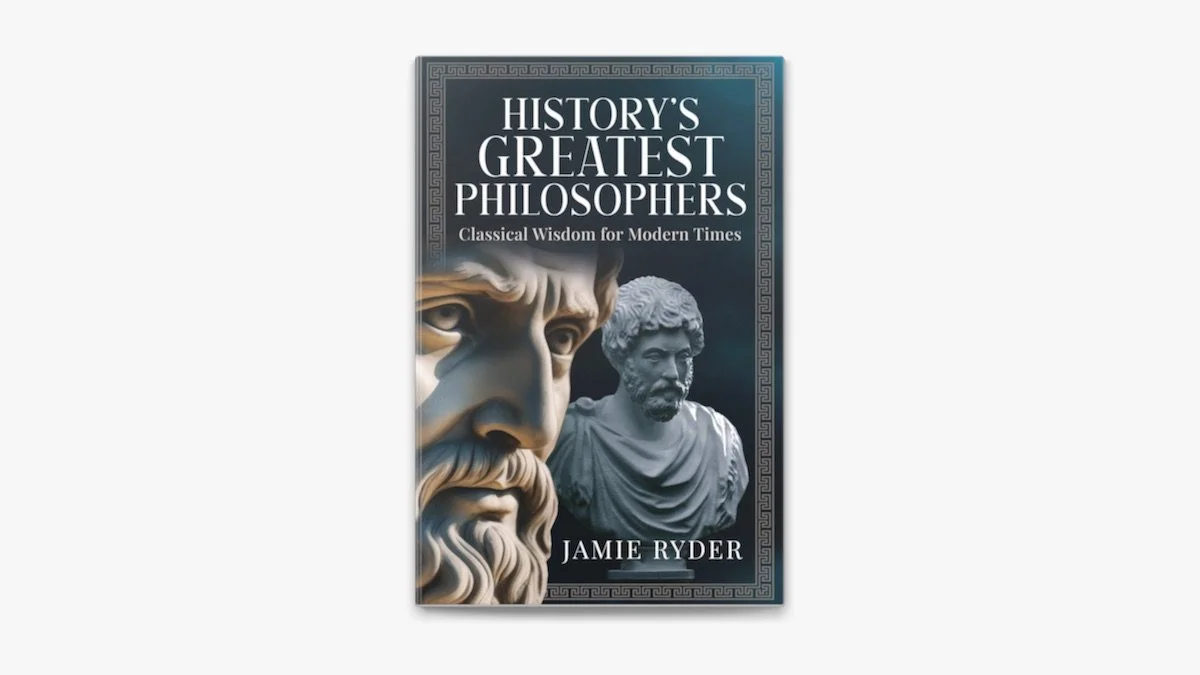
If this article has slaked your thirst for philosophy, you’re welcome to go deeper by checking out my book History’s Greatest Philosophers: Classical Wisdom For Modern Times.
The book features deep dives into the lives of philosophers like Montaigne, Niccolo Machiavelli, and Albert Camus on how we can apply their principles to leadership, mental health, business and learning today.